May 19, 2026
May 19, 2026
Build the Exit Before You Need It: 3 Founder Moves
Most founders treat exit as a future event. It’s a daily discipline. Three moves that make your business run without you — so you stop being the bottleneck.
Most founders treat exit as a future event. It’s a daily discipline. Three moves that make your business run without you — so you stop being the bottleneck.
You built the team. You told them what to do. And somehow everyone’s still waiting on you before anything moves.
I build with AI every single day. It’s basically my whole job. Which is why what I’m about to say sounds strange coming from me: the most dangerous thing about AI isn’t that it takes your job, or that it’s moving too fast. It’s that it’s incredibly good at making you feel like you’re getting somewhere when you’re not.
I don’t always catch it in myself either. There are weeks where I worked the whole time and, looking back, nothing actually moved. If you run a service business and you’ve spent the hours, built the workflows, and still can’t point to a dollar AI actually made you — this one is for you.
Feeling Productive Isn’t the Same as Growing
Last year researchers ran a study on experienced developers — genuinely good engineers. They handed them AI tools and tracked what actually happened. The result wasn’t what anyone expected.
They were nineteen percent slower with the AI. Slower. But every single one of them was certain they’d gotten faster — and not one noticed they were wrong.
That isn’t a developer problem. That’s all of us. Feeling busy is the easiest thing in the world to confuse with actually growing, and AI is brilliant at the work that feels like progress. You finish a post, and there it is. You build a little app over the weekend, and there it is. Your brain says, “I did a thing, that mattered.”
But look at what kind of work that always is. It’s content. It’s posts. The stuff you can hold up and show people. And that’s the lowest-value place you can ever point AI. We reach for it because it feels good and it’s safe. A post can’t reject you. A sales call that went cold can. So we pick the post, every single time.
The Four Things Every Business Does to Make Money
Here’s the reframe that fixed it for me, and it has nothing to do with finding a better tool. Forget AI for a second and just look at your business. Every business — yours, mine, all of them — really only does four things that actually make money.
You ever have a friend going through something — a breakup, a fight with family, something that’s got them spinning — and they call you deep in it? They’re telling you the whole thing, every detail, and they want you mad right there with them. And part of you is. But there’s another part of you that’s just listening. Because from where you’re sitting, you can see the thing they can’t. You can see what really happened, under all the feelings. And you know if you said it out loud right now, they wouldn’t hear you. They’ve got to feel it first.
That’s it. Everything you do all day lives inside one of those four. So AI isn’t a strategy — it’s a tool, and a tool is worthless until you point it at the right thing. The real question was never how do I use more AI. It was which one of my four is actually bleeding, and can I point this thing at that? It’s almost never the one that feels good. It’s usually the boring one you’ve been avoiding.
When Talking Got Free, Listening Got Valuable
It goes deeper than that. Right now every founder, every guru, is racing to use AI to talk. To produce. Post more, build more, just more. That’s the whole conversation. And here’s the part nobody’s saying — probably because there’s no tool to sell you on the other end of it.
The second AI made talking basically free, talking stopped being worth anything. When everybody can crank out infinite content, none of it is rare, so none of it is worth much. The whole world is racing to get better at the one thing that just lost all its value. So what got valuable? The opposite. Listening — because AI is the first tool that can read far more than you ever could, almost all of it, and almost nobody is using it that way.
What Your Market Already Told You
Think about how much your market has already told you. Every sales call. Every review. Every reason somebody gave for going with the other guy. That’s years of people telling you exactly what they want and exactly why they didn’t buy — and you never had the time to read any of it. Nobody does. You were too busy talking. But AI can read all of it in an afternoon, so that’s where I started pointing it. Not at making more stuff, at actually hearing it. Three plays where what comes back will mess with you a little:
Now look at the other side — and I’ve been that guy, so I’m not looking down on anybody. The ones who stay stuck are almost always so close to it, so tied to it, that every problem feels like it’s about them. Something breaks and it doesn’t just feel like a problem. It feels like a verdict. Like the world is trying to tell them something about who they are.
That’s the whole move. You’re not asking AI to make you more stuff. You’re asking it to see the thing you’re too close, and too busy, to see yourself. The truth has been sitting in your own business this whole time — in your calls, in your old emails. You just never had a way to read all of it at once. Now you do, and almost nobody’s doing it, because they’re all heads-down cranking out more.
Being a Real Human Is the Last Edge
Here’s the last piece, and it only matters more every month. While you learn to listen, everybody else is running the other way — using AI to blast out more. More cold emails. More content nobody asked for. More follow-up so obviously a bot it’s almost rude. Look at your own inbox right now and you’ll see it. It all sounds the same. It’s all noise.
So the rare thing now isn’t more output. It’s one real human who actually paid attention. The follow-up that proves you remembered what they said last time. The call nobody else bothered to make. When everything out there sounds like a robot, being a normal person who actually gives a damn becomes your whole edge — and that’s the exact thing everybody’s so busy automating away.
So that’s it. AI made talking free, and the money quietly moved to the two things it can’t fake: actually hearing your people, and actually showing up for them. There’s no app for that. It’s just paying attention, for once, to the stuff that matters. I build with this for a living, and I’m telling you to use less of it to talk and a lot more of it to listen. So next time you wrap a week feeling productive, ask the real question: did I make something move, or did I just make a bunch of stuff that felt like it? Build it so they can stay.
I know all of this because I’ve been her. I had a creative agency. I was really young, and for a while that agency was the thing — the thing I was proudest of in the whole world. My name was on it. The logo was on everything. When somebody asked what I did, that was my whole answer. That was me.
The Engineer costs you the idea that you’re needed. You stop building from what you think should be systematized and start building from what fell apart when you weren’t there. The audit: what broke the last time you left?
The Constraint costs you the identity of being the one who provides. You stop solving with budget and headcount and start handing the problem back. The audit: what did you say no to this week to keep yourself less central?
The Lane costs you the craft — the thing that made you a founder. You stay out of your own lane even when you could do it better. The audit: what are you still holding onto, not because your team can’t, but because you love it?
Somebody from the outside could’ve walked in and told me what was wrong in five minutes. But I wouldn’t have heard them. Because I wasn’t trying to solve that business. I was trying to save it. And when you’re in save mode, you don’t want the truth. You want somebody to tell you it’s gonna be okay. By the time I finally let it go, I didn’t just lose a business. I lost the part of me that used to make things just for the joy of making them. I cared so much I couldn’t see it. I was the mom.
Solving Isn’t a Skill. It’s a Choice.
I only saw it once I let go. Once the distance was there, I could finally look back and see what I never could from the inside. That’s why I catch it so fast now — in the companies I work in, in the people across the table from me. Because I lived on that side of the line long enough to know it the second I see it.
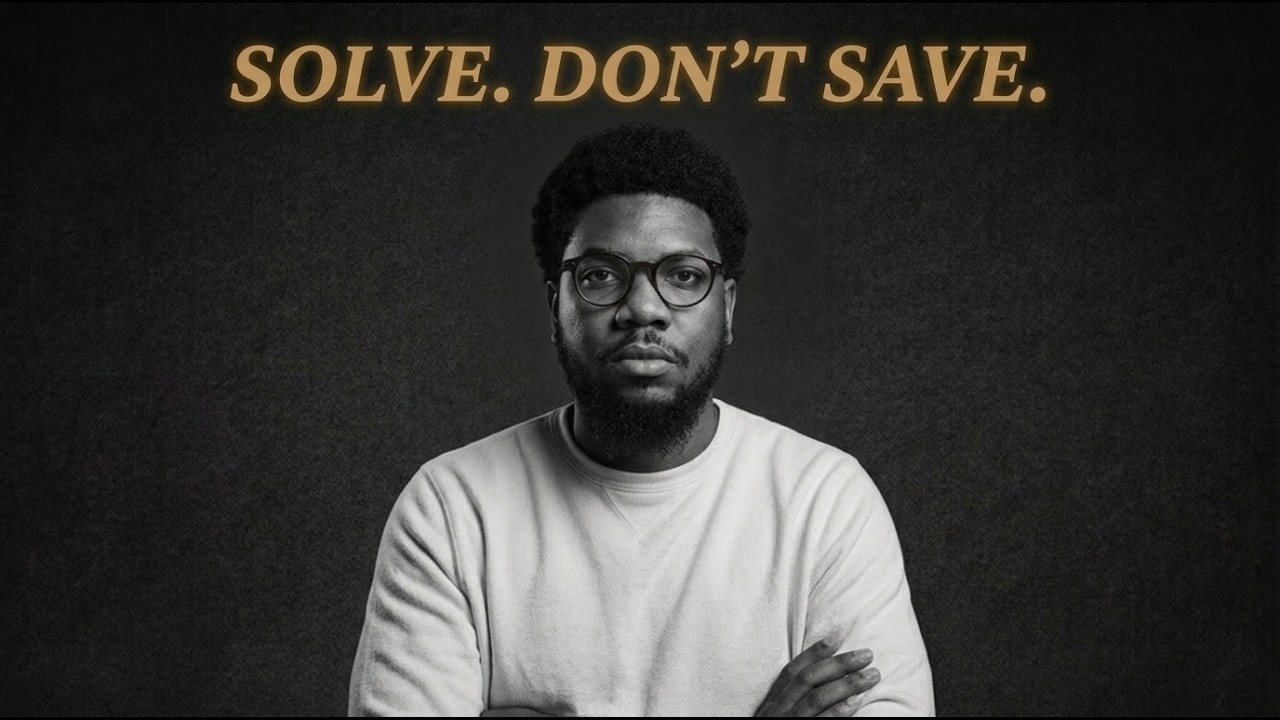
The surgeon didn’t tell the mom she was wrong. He didn’t tell her to stop feeling. He told her something harder — that the thing she was begging for wasn’t the thing that would protect her son. That the person who feels it with you is not the person who fixes it for you. Solve. Don’t save. And every time I sit across from somebody who’s deep in it now and I can see the thing they can’t, I don’t think of it as a skill anymore. I think of it as a choice — a choice to step back long enough to actually look at what’s in front of you. Most people don’t even know they’re allowed to make it.


You built the team. You told them what to do. And somehow everyone’s still waiting on you before anything moves.
I build with AI every single day. It’s basically my whole job. Which is why what I’m about to say sounds strange coming from me: the most dangerous thing about AI isn’t that it takes your job, or that it’s moving too fast. It’s that it’s incredibly good at making you feel like you’re getting somewhere when you’re not.
I don’t always catch it in myself either. There are weeks where I worked the whole time and, looking back, nothing actually moved. If you run a service business and you’ve spent the hours, built the workflows, and still can’t point to a dollar AI actually made you — this one is for you.
Feeling Productive Isn’t the Same as Growing
Last year researchers ran a study on experienced developers — genuinely good engineers. They handed them AI tools and tracked what actually happened. The result wasn’t what anyone expected.
They were nineteen percent slower with the AI. Slower. But every single one of them was certain they’d gotten faster — and not one noticed they were wrong.
That isn’t a developer problem. That’s all of us. Feeling busy is the easiest thing in the world to confuse with actually growing, and AI is brilliant at the work that feels like progress. You finish a post, and there it is. You build a little app over the weekend, and there it is. Your brain says, “I did a thing, that mattered.”
But look at what kind of work that always is. It’s content. It’s posts. The stuff you can hold up and show people. And that’s the lowest-value place you can ever point AI. We reach for it because it feels good and it’s safe. A post can’t reject you. A sales call that went cold can. So we pick the post, every single time.
The Four Things Every Business Does to Make Money
Here’s the reframe that fixed it for me, and it has nothing to do with finding a better tool. Forget AI for a second and just look at your business. Every business — yours, mine, all of them — really only does four things that actually make money.
You ever have a friend going through something — a breakup, a fight with family, something that’s got them spinning — and they call you deep in it? They’re telling you the whole thing, every detail, and they want you mad right there with them. And part of you is. But there’s another part of you that’s just listening. Because from where you’re sitting, you can see the thing they can’t. You can see what really happened, under all the feelings. And you know if you said it out loud right now, they wouldn’t hear you. They’ve got to feel it first.
That’s it. Everything you do all day lives inside one of those four. So AI isn’t a strategy — it’s a tool, and a tool is worthless until you point it at the right thing. The real question was never how do I use more AI. It was which one of my four is actually bleeding, and can I point this thing at that? It’s almost never the one that feels good. It’s usually the boring one you’ve been avoiding.
When Talking Got Free, Listening Got Valuable
It goes deeper than that. Right now every founder, every guru, is racing to use AI to talk. To produce. Post more, build more, just more. That’s the whole conversation. And here’s the part nobody’s saying — probably because there’s no tool to sell you on the other end of it.
The second AI made talking basically free, talking stopped being worth anything. When everybody can crank out infinite content, none of it is rare, so none of it is worth much. The whole world is racing to get better at the one thing that just lost all its value. So what got valuable? The opposite. Listening — because AI is the first tool that can read far more than you ever could, almost all of it, and almost nobody is using it that way.
What Your Market Already Told You
Think about how much your market has already told you. Every sales call. Every review. Every reason somebody gave for going with the other guy. That’s years of people telling you exactly what they want and exactly why they didn’t buy — and you never had the time to read any of it. Nobody does. You were too busy talking. But AI can read all of it in an afternoon, so that’s where I started pointing it. Not at making more stuff, at actually hearing it. Three plays where what comes back will mess with you a little:
Now look at the other side — and I’ve been that guy, so I’m not looking down on anybody. The ones who stay stuck are almost always so close to it, so tied to it, that every problem feels like it’s about them. Something breaks and it doesn’t just feel like a problem. It feels like a verdict. Like the world is trying to tell them something about who they are.
That’s the whole move. You’re not asking AI to make you more stuff. You’re asking it to see the thing you’re too close, and too busy, to see yourself. The truth has been sitting in your own business this whole time — in your calls, in your old emails. You just never had a way to read all of it at once. Now you do, and almost nobody’s doing it, because they’re all heads-down cranking out more.
Being a Real Human Is the Last Edge
Here’s the last piece, and it only matters more every month. While you learn to listen, everybody else is running the other way — using AI to blast out more. More cold emails. More content nobody asked for. More follow-up so obviously a bot it’s almost rude. Look at your own inbox right now and you’ll see it. It all sounds the same. It’s all noise.
So the rare thing now isn’t more output. It’s one real human who actually paid attention. The follow-up that proves you remembered what they said last time. The call nobody else bothered to make. When everything out there sounds like a robot, being a normal person who actually gives a damn becomes your whole edge — and that’s the exact thing everybody’s so busy automating away.
So that’s it. AI made talking free, and the money quietly moved to the two things it can’t fake: actually hearing your people, and actually showing up for them. There’s no app for that. It’s just paying attention, for once, to the stuff that matters. I build with this for a living, and I’m telling you to use less of it to talk and a lot more of it to listen. So next time you wrap a week feeling productive, ask the real question: did I make something move, or did I just make a bunch of stuff that felt like it? Build it so they can stay.
I know all of this because I’ve been her. I had a creative agency. I was really young, and for a while that agency was the thing — the thing I was proudest of in the whole world. My name was on it. The logo was on everything. When somebody asked what I did, that was my whole answer. That was me.
The Engineer costs you the idea that you’re needed. You stop building from what you think should be systematized and start building from what fell apart when you weren’t there. The audit: what broke the last time you left?
The Constraint costs you the identity of being the one who provides. You stop solving with budget and headcount and start handing the problem back. The audit: what did you say no to this week to keep yourself less central?
The Lane costs you the craft — the thing that made you a founder. You stay out of your own lane even when you could do it better. The audit: what are you still holding onto, not because your team can’t, but because you love it?
Somebody from the outside could’ve walked in and told me what was wrong in five minutes. But I wouldn’t have heard them. Because I wasn’t trying to solve that business. I was trying to save it. And when you’re in save mode, you don’t want the truth. You want somebody to tell you it’s gonna be okay. By the time I finally let it go, I didn’t just lose a business. I lost the part of me that used to make things just for the joy of making them. I cared so much I couldn’t see it. I was the mom.
Solving Isn’t a Skill. It’s a Choice.
I only saw it once I let go. Once the distance was there, I could finally look back and see what I never could from the inside. That’s why I catch it so fast now — in the companies I work in, in the people across the table from me. Because I lived on that side of the line long enough to know it the second I see it.
The surgeon didn’t tell the mom she was wrong. He didn’t tell her to stop feeling. He told her something harder — that the thing she was begging for wasn’t the thing that would protect her son. That the person who feels it with you is not the person who fixes it for you. Solve. Don’t save. And every time I sit across from somebody who’s deep in it now and I can see the thing they can’t, I don’t think of it as a skill anymore. I think of it as a choice — a choice to step back long enough to actually look at what’s in front of you. Most people don’t even know they’re allowed to make it.