June 2, 2026
June 2, 2026
Why Automation Breaks Your Business Faster (And How to Fix It)
Automation doesn’t fix a broken process — it amplifies it. Here’s why most founders are scaling the breakage, and the one step almost everybody skips.
Automation doesn’t fix a broken process — it amplifies it. Here’s why most founders are scaling the breakage, and the one step almost everybody skips.
Everybody right now is telling you to automate everything. Here’s the part nobody tells you: when you automate something that’s already broken, it doesn’t slow down. It breaks faster.
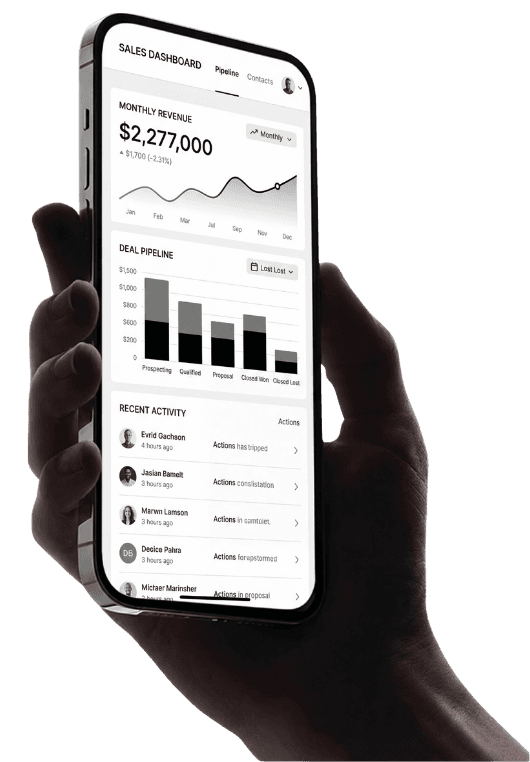
When you hand a broken process to a machine, it just runs broken — at full speed, all day, on a schedule. And you won’t even see it happen. Because a business on autopilot and a business falling apart on autopilot look exactly the same. Same clean dashboard. Same messages going out right on time. One of them is working. The other one is quietly losing people you’ll never even know you lost — and the automation is the thing hiding it.
I’m not against any of this. I build these systems for a living and I use them every day. I’m telling you this because it’s the reason I keep watching the same thing break in business after business. The systems aren’t the problem. It’s where people put them.
Automation Amplifies — It Doesn’t Fix
Here’s the thing nobody says out loud. Automation doesn’t fix anything. It amplifies. Point it at something that works and it makes that thing bigger. Point it at something broken and you get broken — faster, and everywhere at once. Bill Gates put it decades ago and founders are still ignoring it, now with far more powerful tools in their hands.
Automation applied to an efficient operation will magnify the efficiency. Automation applied to an inefficient operation will magnify the inefficiency.
The Follow-Up That Quietly Lost Three Buyers
It always starts the same way. Somebody builds a follow-up — a message that goes out when a person reaches out. They spend a weekend on it, get it running, and then don’t touch it for weeks because it looks like it’s working. Then one day you actually read what’s going out. Every single person is getting the same flat message. Doesn’t matter what they asked. Doesn’t matter when they came in.
Someone ready to buy today doesn’t need another email in three days — they need a person, and they don’t get one. Someone who isn’t close gets pushed, and pushing makes them leave faster. The machine can’t feel any of that. The second it feels automated, the trust is gone, and you don’t get a second shot. In one month, in one pipeline, I watched at least three people who were ready to buy get pushed right out the door by a system that treated everybody the same. Run that all year and you’re not losing three people — you’re losing three a month and calling it a slow quarter.
The Stats Nobody Puts Next to Each Other
This isn’t a few bad operators. It’s almost everybody, and the numbers back it up. Adoption has surged, but the results haven’t kept up. In 2025, S&P Global found that 42% of companies had abandoned most of their AI initiatives — up from 17% the year before. And an MIT report that year found 95% of enterprise AI pilots were delivering no measurable return. Here’s the part that matters: the tools worked fine. That was never the problem. We keep pointing working tools at broken foundations — a process nobody defined, steps nobody tested by hand before handing them to a machine.
Why Broken Looks Exactly Like Working
When a person runs a broken process, it’s messy and slow. Things don’t connect, and sooner or later somebody notices and says something. But hand that same broken process to a machine and it runs clean. Messages go out on time. The sequence fires. Everything looks right. So the problem doesn’t get fixed — it disappears, because now nobody can even see it. The machine does the broken thing perfectly, on time, with total confidence. A person would have hesitated and felt something was off. The machine just runs.
And it keeps happening for a reason: building the system feels like solving the problem. You spend a weekend wiring it up, you hit go, and your brain gives you that little hit — done, handled, next. Going back and doing it by hand gives you none of that. There’s no screenshot for sitting down, talking to every lead yourself, and finding out the process was wrong. So we reach for the tool every time, and the real work just sits there because it’s uncomfortable and there’s nothing to show for it.
The Test Before You Build Anything
So here’s the thing I keep coming back to, and it’s the opposite of what everyone’s selling you. Automate nothing until you’ve run it by hand long enough to know it actually works. That’s the step almost everybody skips. And before you build a single thing, there’s a test: try to draw it. Every step, every decision, every handoff. If you can’t draw it on one page, you don’t understand it well enough to hand it to a machine yet.
When I rebuild a follow-up, I shut the automation off completely and work every lead by hand for weeks. The first few days it feels like going backwards. By the second week, you start seeing things no tool would ever catch — the person who asked about one thing but actually needs another, the one who’s ready but isn’t saying it out loud, the one who went quiet because they’re comparing you to somebody else and waiting. None of that is programmable. You only learn it by doing it enough times to know what the moment before someone goes cold actually sounds like.
Turn the Automation Back On
Now you turn the automation back on. Same tool. Same setup. Nothing about the technology changed — and the results aren’t close. Because you’re not automating a guess anymore. You’re automating something you already know works. The system can finally sort people: the ready ones get to a real person fast, the ones just looking get a slower path, and the ones in the middle get time instead of pressure. It isn’t smarter technology. It’s a better foundation.
This is the part most people get backwards about AI. The better these tools get — the agents, the models, whatever’s next — the more they reward the person who already knows their process cold. A great tool pointed at a proven process is a multiplier. That same tool pointed at a guess just runs the guess faster. The tool got smarter. It didn’t get judgment. That part’s still on you.
The Steps, In Order
Cut first. Before anything else, ask whether the step should even exist. Kill the ones that got added on a busy week and never got removed — don’t automate work that shouldn’t be happening at all.
Run it by hand. Shut the automation off and work every case yourself, for weeks. This is where you learn who needs what, where it breaks, and the exact moment a person has to step in.
Draw it on one page. Map every step, decision, and handoff. If it doesn’t fit on a single page, you don’t understand it well enough to hand it to a machine yet.
Ask the real question. Can a person do this right now and get a good result every single time? If yes, automate it. If no, leave it alone and do the work first.
Automate the repetition, keep the judgment human. The same-every-time stuff is what the machine is for. The conversations, the judgment calls, the moment somebody needs to feel heard — that stays human.
How You Actually Know You Got There
Once the foundation is right, the problems don’t stop — but now you can see them. When the thing underneath works and something breaks, it sticks out instead of blending in. Before, fine and broken looked the same, everything felt urgent, and everything felt like it needed you. Now you catch the real problem right away because everything around it is working.
Here’s how you know you got there. You walk away for two weeks and come back to it running cleaner than you left it. Not on fire. Not a pile of things waiting on you. Just running. That’s a system you built. The other version isn’t a business — it’s a job that follows you on vacation. Everybody’s out here saying automate everything. I’m just saying know what you’re automating, because the tool doesn’t care if it’s right. It runs whatever you give it. Build it so they can stay.




Everybody right now is telling you to automate everything. Here’s the part nobody tells you: when you automate something that’s already broken, it doesn’t slow down. It breaks faster.
When you hand a broken process to a machine, it just runs broken — at full speed, all day, on a schedule. And you won’t even see it happen. Because a business on autopilot and a business falling apart on autopilot look exactly the same. Same clean dashboard. Same messages going out right on time. One of them is working. The other one is quietly losing people you’ll never even know you lost — and the automation is the thing hiding it.
I’m not against any of this. I build these systems for a living and I use them every day. I’m telling you this because it’s the reason I keep watching the same thing break in business after business. The systems aren’t the problem. It’s where people put them.
Automation Amplifies — It Doesn’t Fix
Here’s the thing nobody says out loud. Automation doesn’t fix anything. It amplifies. Point it at something that works and it makes that thing bigger. Point it at something broken and you get broken — faster, and everywhere at once. Bill Gates put it decades ago and founders are still ignoring it, now with far more powerful tools in their hands.
Automation applied to an efficient operation will magnify the efficiency. Automation applied to an inefficient operation will magnify the inefficiency.
The Follow-Up That Quietly Lost Three Buyers
It always starts the same way. Somebody builds a follow-up — a message that goes out when a person reaches out. They spend a weekend on it, get it running, and then don’t touch it for weeks because it looks like it’s working. Then one day you actually read what’s going out. Every single person is getting the same flat message. Doesn’t matter what they asked. Doesn’t matter when they came in.
Someone ready to buy today doesn’t need another email in three days — they need a person, and they don’t get one. Someone who isn’t close gets pushed, and pushing makes them leave faster. The machine can’t feel any of that. The second it feels automated, the trust is gone, and you don’t get a second shot. In one month, in one pipeline, I watched at least three people who were ready to buy get pushed right out the door by a system that treated everybody the same. Run that all year and you’re not losing three people — you’re losing three a month and calling it a slow quarter.
The Stats Nobody Puts Next to Each Other
This isn’t a few bad operators. It’s almost everybody, and the numbers back it up. Adoption has surged, but the results haven’t kept up. In 2025, S&P Global found that 42% of companies had abandoned most of their AI initiatives — up from 17% the year before. And an MIT report that year found 95% of enterprise AI pilots were delivering no measurable return. Here’s the part that matters: the tools worked fine. That was never the problem. We keep pointing working tools at broken foundations — a process nobody defined, steps nobody tested by hand before handing them to a machine.
Why Broken Looks Exactly Like Working
When a person runs a broken process, it’s messy and slow. Things don’t connect, and sooner or later somebody notices and says something. But hand that same broken process to a machine and it runs clean. Messages go out on time. The sequence fires. Everything looks right. So the problem doesn’t get fixed — it disappears, because now nobody can even see it. The machine does the broken thing perfectly, on time, with total confidence. A person would have hesitated and felt something was off. The machine just runs.
And it keeps happening for a reason: building the system feels like solving the problem. You spend a weekend wiring it up, you hit go, and your brain gives you that little hit — done, handled, next. Going back and doing it by hand gives you none of that. There’s no screenshot for sitting down, talking to every lead yourself, and finding out the process was wrong. So we reach for the tool every time, and the real work just sits there because it’s uncomfortable and there’s nothing to show for it.
The Test Before You Build Anything
So here’s the thing I keep coming back to, and it’s the opposite of what everyone’s selling you. Automate nothing until you’ve run it by hand long enough to know it actually works. That’s the step almost everybody skips. And before you build a single thing, there’s a test: try to draw it. Every step, every decision, every handoff. If you can’t draw it on one page, you don’t understand it well enough to hand it to a machine yet.
When I rebuild a follow-up, I shut the automation off completely and work every lead by hand for weeks. The first few days it feels like going backwards. By the second week, you start seeing things no tool would ever catch — the person who asked about one thing but actually needs another, the one who’s ready but isn’t saying it out loud, the one who went quiet because they’re comparing you to somebody else and waiting. None of that is programmable. You only learn it by doing it enough times to know what the moment before someone goes cold actually sounds like.
Turn the Automation Back On
Now you turn the automation back on. Same tool. Same setup. Nothing about the technology changed — and the results aren’t close. Because you’re not automating a guess anymore. You’re automating something you already know works. The system can finally sort people: the ready ones get to a real person fast, the ones just looking get a slower path, and the ones in the middle get time instead of pressure. It isn’t smarter technology. It’s a better foundation.
This is the part most people get backwards about AI. The better these tools get — the agents, the models, whatever’s next — the more they reward the person who already knows their process cold. A great tool pointed at a proven process is a multiplier. That same tool pointed at a guess just runs the guess faster. The tool got smarter. It didn’t get judgment. That part’s still on you.
The Steps, In Order
Cut first. Before anything else, ask whether the step should even exist. Kill the ones that got added on a busy week and never got removed — don’t automate work that shouldn’t be happening at all.
Run it by hand. Shut the automation off and work every case yourself, for weeks. This is where you learn who needs what, where it breaks, and the exact moment a person has to step in.
Draw it on one page. Map every step, decision, and handoff. If it doesn’t fit on a single page, you don’t understand it well enough to hand it to a machine yet.
Ask the real question. Can a person do this right now and get a good result every single time? If yes, automate it. If no, leave it alone and do the work first.
Automate the repetition, keep the judgment human. The same-every-time stuff is what the machine is for. The conversations, the judgment calls, the moment somebody needs to feel heard — that stays human.
How You Actually Know You Got There
Once the foundation is right, the problems don’t stop — but now you can see them. When the thing underneath works and something breaks, it sticks out instead of blending in. Before, fine and broken looked the same, everything felt urgent, and everything felt like it needed you. Now you catch the real problem right away because everything around it is working.
Here’s how you know you got there. You walk away for two weeks and come back to it running cleaner than you left it. Not on fire. Not a pile of things waiting on you. Just running. That’s a system you built. The other version isn’t a business — it’s a job that follows you on vacation. Everybody’s out here saying automate everything. I’m just saying know what you’re automating, because the tool doesn’t care if it’s right. It runs whatever you give it. Build it so they can stay.